nivasnanicreations@gmail.com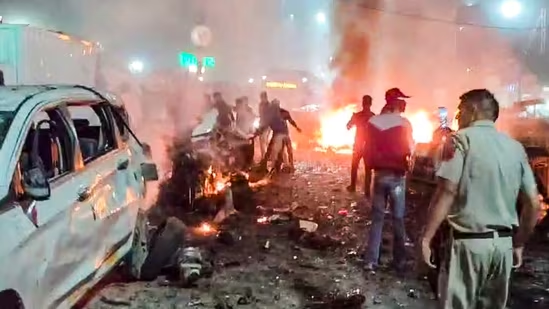
Introduction
India woke up to a shocking incident on 10 November 2025, when a car bomb exploded near the iconic Red Fort in Delhi, killing 10 people and injuring 32 others. The attack triggered a nationwide alert, and over the past few days, investigative agencies have been working tirelessly to uncover the network behind this terror strike.
In a major breakthrough, the National Investigation Agency (NIA) has arrested four more suspects, including a surgeon and a Mufti, expanding the scope of the investigation and revealing deeper layers of involvement. This blog breaks down the latest developments, their implications, and what this means for India’s national security landscape.
4 More Arrests: What We Know So Far
According to a report by Reuters, the NIA has detained three doctors and a Mufti from Jammu & Kashmir. Who are suspected of having links with Pakistan-based extremist groups.
👉 Source: Reuters Report
The arrests were made after extensive surveillance, electronic data analysis, and interrogation of previously arrested suspects. These individuals are believed to have:
- Facilitated logistics
- Provided medical support to injured operatives
- Supported planning and communication
- Had ideological connections with cross-border elements
The arrests have raised important concerns about the involvement of highly educated professionals in extremist networks, a pattern seen in many global terror cases.
Judicial Proceedings: 10-Day NIA Custody Granted
A Delhi court has approved 10-day custody of the four accused, giving investigators more time to interrogate them and trace the larger network involved in the planning and execution of the Red Fort blast.
👉 Source: Times of India Report
During this period, the NIA will likely focus on:
- Identifying foreign handlers
- Tracking financial trails
- Mapping digital communication
- Understanding recruitment methods
- Establishing the chain of command
Officials have stated that multiple digital devices. Including mobile phones and hard drives, have been seized and are currently being examined.
How the Attack Was Carried Out
Preliminary investigation suggests that the bomb was planted in a car parked close to the Red Fort’s entrance. The device appears to have been triggered remotely, indicating the attackers had:
- Real-time surveillance abilities
- Knowledge of the area’s security gaps
- Access to high-grade explosives
This attack has once again raised questions about Delhi’s urban security systems and the vulnerabilities in high-footfall heritage zones.
The Educated Extremist Problem
One of the aspects gaining national attention is the arrest of medical professionals, including a surgeon. This follows a pattern seen in global terror organisations. Where highly educated individuals are strategically recruited to provide:
- Medical care
- Technical expertise
- Research capabilities
- Credibility within communities
This trend brings forth a major concern: radicalisation is no longer limited to fringe groups. Even those belonging to respected professions can be pulled into extremist ideologiesed.
Wider Network & International Angle
Investigators believe that this attack may be linked to groups operating from across the border. The involvement of a Mufti also suggests ideological indoctrination might have played a strong role.
Multiple agencies, including:
- Intelligence Bureau (IB)
- Delhi Police Special Cell
- RAW (Research & Analysis Wing)
…are now assisting the NIA, reflecting the seriousness and complexity of the case.
What This Means for National Security
This incident highlights several urgent security concerns:
1️⃣ Radicalisation in Professional Sectors
If skilled professionals are participating in such crimes. Surveillance and community outreach strategies need revisiting.
2️⃣ Major Security Gaps in Delhi
Despite being one of the most secure cities in India, Delhi saw a massive breach close to a world-famous monument.
3️⃣ Need for Stronger Coordination Between Agencies
Joint operations, data-sharing, and state-centre cooperation are crucial in preventing future attacks.
4️⃣ Growing Cross-Border Influence
India’s intelligence community must now focus on preventing online indoctrination and encrypted communication from foreign handlers.
Public Sentiment & Social Media Reactions
Citizens across India have expressed anger and grief. Many are also questioning how such a blast could happen in a high-security zone.
Social media platforms like X (formerly Twitter) are filled with:
- Demands for tougher laws
- Calls for improved surveillance
- Concerns about the involvement of doctors
The case has become a national conversation that touches politics, public safety, and counter-terrorism strategies.
Conclusion
The arrest of four additional suspects in the Delhi Red Fort blast marks a turning point in the investigation. With the involvement of educated individuals and possible cross-border links, this case is revealing deeper issues related to radicalisation and India’s national security framework. As the NIA continues its interrogation and evidence-gathering, the country awaits answers — and most importantly, accountability.