nivasnanicreations@gmail.com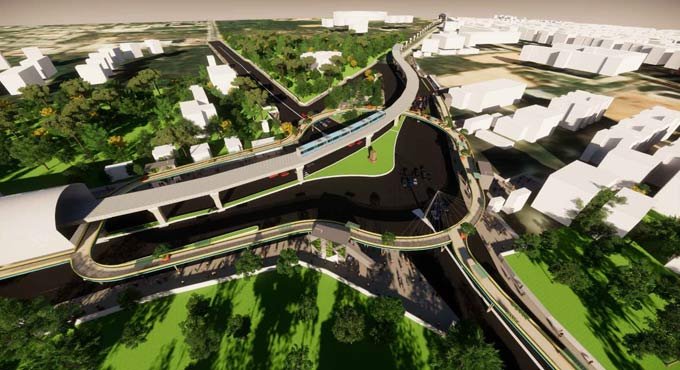
Hyderabad is rapidly transforming into one of India’s most advanced urban centers, and its latest infrastructure initiative—the construction of the country’s largest interconnected skywalk network—promises to reshape pedestrian mobility in the city. As part of the Greater Hyderabad Municipal Corporation (GHMC)’s long-term master plan, this mega project will improve safety, reduce traffic congestion, and enhance accessibility across some of the busiest parts of the city. The project, scheduled for completion by 2026. This is being hailed as a modern solution to the increasing challenges of urban mobility.
The idea of an integrated skywalk network is not new globally, but Hyderabad is now taking bold steps to implement one at a significant scale. The need for such infrastructure became evident as traffic volumes increased near metro stations, commercial zones, educational hubs, and IT corridors. Areas like Hitech City, Kukatpally, Secunderabad, LB Nagar, and Ameerpet often witness heavy pedestrian movement, making road safety a growing concern. With thousands of daily commuters crossing busy junctions, the skywalk network aims to create a safe and efficient alternative.
The proposed skywalk system will initially span around 8 kilometers, connecting key road intersections and transportation hubs. Unlike traditional standalone foot-over-bridges, this project will create a continuous pedestrian route elevated above the streets. It will include multiple entry and exit points that directly connect office complexes, hospitals, shopping malls, and metro stations. For example, in Ameerpet, a centrally located skywalk would allow thousands of metro passengers to access bus stops and commercial malls without stepping onto the road.
One of the most noteworthy aspects of this project is its emphasis on user comfort and safety. The skywalks will feature covered roofing to shield pedestrians from heat and rain. With Hyderabad’s rising temperatures during summer months, this weather-proof design ensures walkability throughout the year. Additionally, the network will include escalators and elevators at major points, making it accessible for senior citizens, children, and people with disabilities. These features will help encourage more residents to adopt walking as a viable part of their daily commute.
The skywalk network will also integrate smart-safety systems. GHMC officials have confirmed that every segment of the skywalk. Will be monitored by high-resolution 360-degree CCTV cameras. Connected to a centralized control room. This will help improve night-time safety, especially in areas that remain crowded even after office hours. LED lighting, emergency call buttons, and security patrols will further enhance the overall user experience.
Traffic experts believe that this skywalk network will significantly reduce road congestion. Hyderabad’s major intersections. Often get clogged due to pedestrians waiting to cross the street. With an elevated walkway in place. Vehicle flow will be smoother and traffic signals can be optimized. Moreover, reducing pedestrian-road interactions lowers the risk of accidents. Over the years, the city has seen a steady increase in road safety campaigns, and this infrastructure addition supports these efforts.
The skywalk project also aligns with Hyderabad’s ongoing transformation into a smart city. The state government has increasingly focused on future-ready infrastructure—be it modern metro systems, upgraded road networks, or tech-driven traffic monitoring. Urban planning experts say this project is a milestone that places Hyderabad alongside cities like Singapore, Seoul, and Bangkok, which have long championed elevated pedestrian walkways.
Local businesses are also expected to benefit from the skywalk networked. Commercial areas connected to the skywalk will likely witness increased foot traffic, boosting retail activity. When pedestrians can move seamlessly and safely, they are more likely to explore surrounding areas. The project is not merely a mobility upgrade—it’s an economic catalyst that strengthens city life.
Of course, large infrastructure projects come with challenges. Construction in densely populated areas may cause temporary disruptions. Some residents have expressed concern over possible encroachment issues and the aesthetics of elevated structures. GHMC has assured the public that modern architectural designs. They will be used to blend the skywalks with the city’s urban landscape.
As Hyderabad continues to expand with new IT parks, residential zones, and commercial districts, walkability must remain a top priority. The upcoming urban skywalk network reflects a progressive vision—one where pedestrian safety, sustainable mobility, and modern urban planning come together.
Once completed in 2026. This will not only be India’s largest interconnected skywalk system. But also a defining symbol of Hyderabad’s ambition to become one of the most livable cities in the country.