nivasnanicreations@gmail.com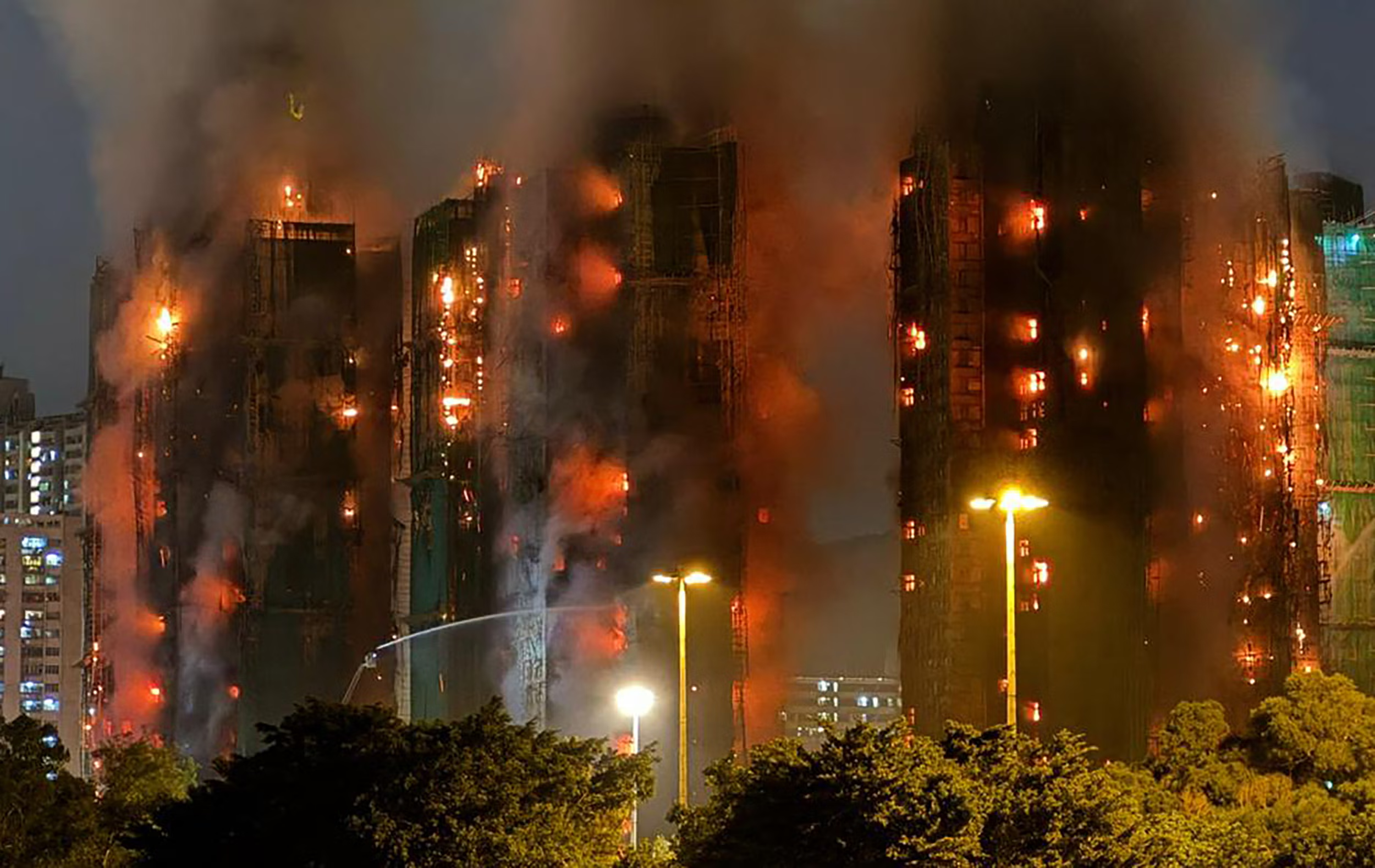
A catastrophic fire in Hong Kong has triggered one of the worst urban disasters in recent years, leaving over 100 casualties and hundreds missing as emergency teams continue large-scale operations. The massive blaze tore through a high-density commercial and residential building, catching occupants completely off guard. Early investigations indicate severe safety violations, leading authorities to arrest three people on manslaughter charges.
For official updates, readers can follow the Hong Kong Fire Services Department (HKFSD) here:
👉 https://www.hkfsd.gov.hk/eng/
How the Disaster Began
The fire reportedly began in the lower floors, potentially linked to electrical faults or hazardous modifications. Several survivors claim they heard loud structural noises before thick smoke began flooding corridors. Safety experts have repeatedly warned that Hong Kong’s aging high-rise buildings are prone to fire accidents when safety checks are ignored.
For background information on high-rise fire risks, refer to:
• High-Rise Fire Safety Guidelines – https://www.nfpa.org/education
• Hong Kong Building Codes & Regulations – https://www.bd.gov.hk/en/resources/codes-and-references/index.html
Residents also allege that the building had narrow passageways, faulty ventilation, and poorly maintained fire exits — issues commonly flagged in older structures across the city.
A similar pattern appeared in the 2016 Mong Kok fire, which raised questions about unregulated alterations in older neighborhoods:
👉 https://www.scmp.com/news/hong-kong
Casualties and Search Operations
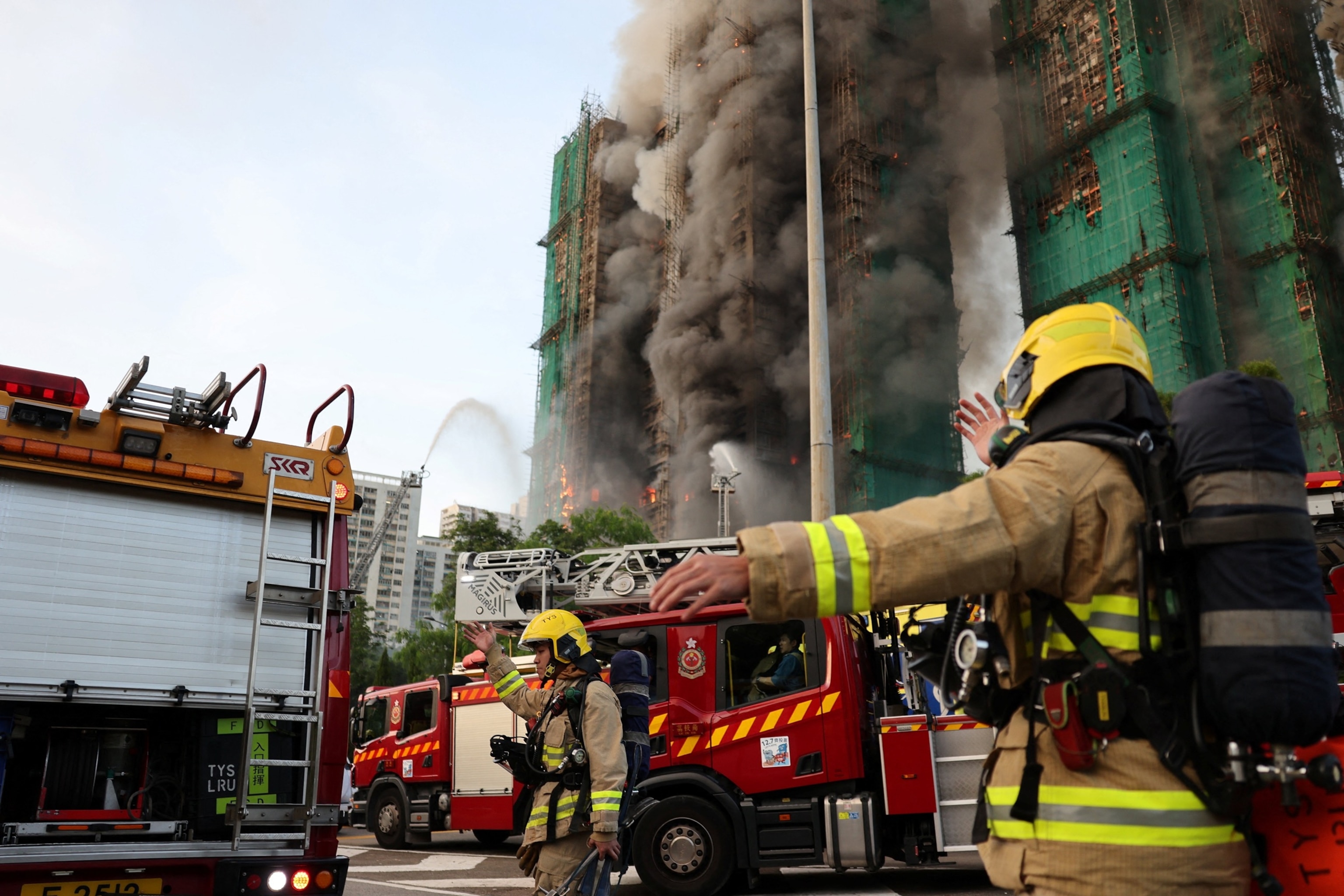
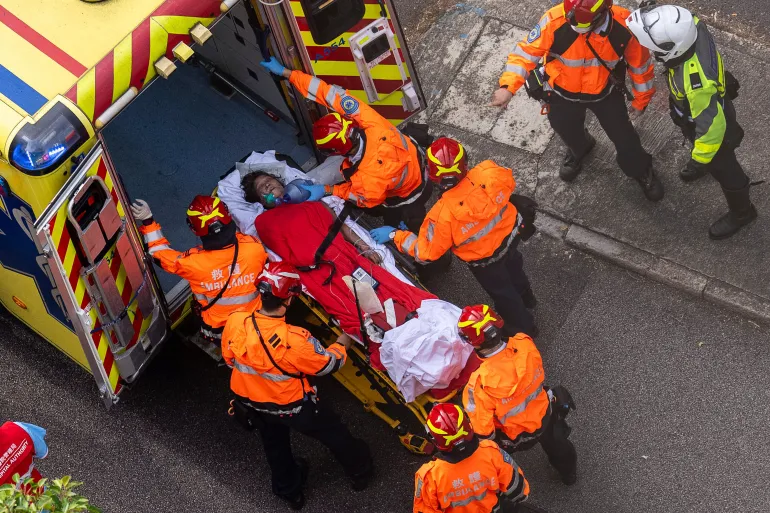
Rescue teams have been working nonstop, but the situation remains critical. With over 100 confirmed casualties, the numbers are expected to rise as firefighters sift through debris and collapsed sections. Many victims faced smoke inhalation, severe burns, or were trapped behind blocked escape routes.
To understand typical emergency response protocols, you may refer to:
• Hong Kong Emergency Response & Evacuation Procedures – https://www.gov.hk/en/residents/
Families of missing residents have gathered at temporary assistance centers, supported by medical personnel, trauma counselors, and volunteers. NGOs and humanitarian groups have already launched relief and donation drives.
For relief assistance or to participate in support efforts:
• Hong Kong Red Cross – https://www.redcross.org.hk
• Volunteer Opportunities – https://www.volunteernow.hk
Three Arrested for Manslaughter
In a major development, authorities arrested three individuals connected to the building’s ownership and maintenance. Investigators suspect the fire was intensified by illegal structural alterations, blocked ventilation routes, and unauthorized storage of flammable materials.
Information on Hong Kong’s legal framework for building violations can be found here:
• Buildings Ordinance & Safety Laws – https://www.elegislation.gov.hk
Similar tragedies in the past, such as the 2011 Fa Yuen Street fire, also resulted from negligence and led to major legal repercussions.
Background on that incident:
👉 https://www.bbc.com/news/world-asia
The current arrests signal that the government intends to hold individuals accountable for endangering public safety.
Public Outrage and Online Reactions
The fire has sparked widespread anger on social media. Thousands of posts under hashtags like #HongKongFire, #JusticeForVictims, and #SafetyReforms demand transparency and strict action against those responsible.
Public safety advocates are also urging the government to strengthen enforcement of fire safety protocols.
For global fire safety best practices:
• International Fire Safety Standards Coalition – https://www.ifss-coalition.org
• Global Disaster Preparedness Center – https://www.preparecenter.org
Users across platforms are sharing emergency contacts, blood donation requests, and other critical information to support victims and survivors.
Government Response: Investigation and Reforms Ahead
Hong Kong’s Chief Executive has ordered a full-scale public inquiry into the incident. A special investigation committee will analyze structural records, past inspection reports, and emergency response timelines.
Readers can track official government releases here:
👉 https://www.info.gov.hk/gia/general/
Authorities have also deployed drones, heat sensors, and structural engineers to search deeper into unstable parts of the building. Urban safety experts stress that the city’s compact architecture makes fire prevention extremely challenging — yet essential.
In recent assessments, safety foundations like the National Fire Protection Association (NFPA) have recommended better fire-resistant materials, regular evacuation drills, and stricter monitoring of building alterations.
NFPA guidelines: https://www.nfpa.org
Lessons for Urban Cities Worldwide
The Hong Kong fire is not just a local tragedy — it serves as a global reminder of how quickly fire disasters can devastate densely populated urban centers. Cities worldwide, especially in Asia, face similar challenges: aging infrastructure, overcrowded buildings, and lapses in safety compliance.
For studies on urban fire management, see:
• World Bank Urban Disaster Risk Management – https://www.worldbank.org/en/topic/disasterriskmanagement
• UNDRR Urban Resilience Framework – https://www.undrr.org
Strengthening building inspections, enforcing safety codes, and educating citizens about fire readiness are critical to preventing such disasters.
Conclusion
The Hong Kong fire stands as a stark reminder of how negligence, poor safety planning, and unregulated construction can cost countless lives. As the city mourns those lost and prays for the missing, authorities push forward with rescue efforts and a deep investigation into the truth.
The arrests of the three individuals mark only the beginning of the accountability process. What comes next — reforms, regulations, and systemic change — will determine whether tragedies like this can be prevented in the future.