nivasnanicreations@gmail.com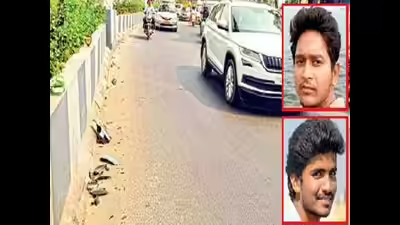
Introduction
Hyderabad woke up to yet another heartbreaking road tragedy when two 32-year-old friends lost their lives after their bike crashed into a metro pillar near Victoria Memorial Metro Station in Saroornagar. According to initial police reports, the accident occurred in the early hours of the morning, and the impact was so severe that both riders succumbed on the spot.
This incident, reported by The Times of India (Source: https://timesofindia.indiatimes.com/city/hyderabad/two-friends-die-as-bike-rams-metro-pillar-in-hyderabad/articleshow/125524650.cms), has once again sparked concerns about road safety, speeding, and infrastructure hazards in Hyderabad’s rapidly growing urban spaces.
The Tragic Sequence of Events
The victims, reportedly close friends and residents of the surrounding locality, were riding a high-powered bike. Early evidence suggests they were traveling at high speed when they lost control near the metro pillar. The stretch near the Victoria Memorial Metro Station, although well-lit, has witnessed several minor accidents previously due to sharp curves and reduced visibility at certain points during the night.
Locals mentioned that this area often becomes a danger zone after dark. Fewer vehicles, open stretches, and smooth roads tend to encourage riders to overspeed, which significantly increases the risk of fatal impacts—especially with fixed structures like metro pillars.
Speeding: The Unseen Enemy on Hyderabad Roads
Speeding remains one of the top causes of urban road accidents in India. Hyderabad, being a major metropolitan city with rapidly expanding infrastructure, faces this challenge daily. With the expansion of metro corridors, elevated flyovers, and signal-free routes, roads have become smoother—unfortunately inviting risky riding behaviors.
The Hyderabad Traffic Police repeatedly issues advisories regarding:
- Speed monitoring through interceptor vehicles
- Helmet enforcement drives
- Night-patrolling teams
- Surveillance through CCTV cameras
Yet, accidents like this continue to occur, showing that rules alone are not enough—mindset and awareness must evolve too.
Metro Infrastructure: Safe but Demanding Caution
Hyderabad Metro Rail has transformed the way the city travels. The pillars are placed systematically and structurally sound, but fixed structures on the road always require careful maneuvering.
Urban planners often recommend that:
- Reflective paint
- Higher-intensity lighting
- Warning boards
- Speed breakers at accident-prone points
should be implemented near metro pillars and sharp-turning roads. While many stretches already have such features, consistent upgrades and audits are needed—especially in zones with increasing accident frequency.
Are Our Roads Truly Safe at Night?
Night-time crashes are disproportionately fatal in Indian cities because:
- Drivers/riders tend to overspeed due to lower traffic density
- Reduced visibility increases reaction time
- Fatigue or drowsiness affects judgment
- Poor lighting in isolated stretches worsens conditions
The Saroornagar accident highlights the urgent need to strengthen late-night road safety regulation, including:
- More police patrolling
- Installation of new surveillance cameras
- Danger-zone signage near metro pillars
- Strict penalties for night-time speeding
Community Reaction & Ongoing Investigation
The tragic loss of two young lives has shocked residents of Saroornagar and nearby areas. Many locals took to social media urging the government to increase reflective signboards along metro corridors and intensify police vigilance.
The police are reviewing CCTV footage to determine the exact cause—whether it was overspeeding, sudden swerving, or another rider on the road that may have led to the crash. The incident is currently being investigated under sections related to negligent driving and accidental death.
A Broader Look at Hyderabad’s Accident Statistics
Hyderabad has seen an alarming rise in road accidents over the last few years. According to traffic department data:
- Speeding accounts for over 40% of fatal crashes
- Young riders (age 20–35) are most often the victims
- Night-time accidents (between 10 PM and 5 AM) have significantly higher fatality rates
Areas like Saroornagar, LB Nagar, Jubilee Hills, and Madhapur have emerged as hotspots.
This accident serves as a reminder that even well-designed metro routes can become dangerous zones when speed limits are ignored.
What Can Be Done? Preventive Measures for Safer Roads
To prevent similar tragedies, coordinated action is necessary from both citizens and authorities.
1. Stronger Enforcement
- More night-time speed checks
- Heavier fines for no-helmet and triple riding
- Alcohol tests during weekends
2. Better Road Design & Markings
- Reflective strips on metro pillars
- Speed-reducing rumble strips
- Warning signs before accident-prone zones
3. Public Awareness Drives
Schools, colleges, IT companies, and community groups must participate in road safety campaigns.
4. Responsible Riding Habits
- Maintaining moderate speed
- Wearing protective gear
- Avoiding unnecessary night rides
- Staying alert and aware of road conditions
Conclusion
The heartbreaking loss of two young friends in Hyderabad is more than just another headline—it is a reminder of how fragile life is on the road. Whether it is enforcement, infrastructure, or simple rider awareness, every factor matters when it comes to preventing fatal accidents.
Hyderabad is growing. Its roads, metro lines, flyovers, and infrastructure reflect progress. But progress means little if safety is compromised. It is time for riders and authorities to work together and ensure that such tragedies do not repeat.